At a glance
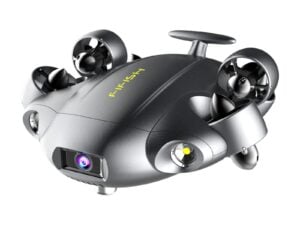
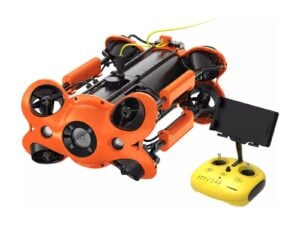
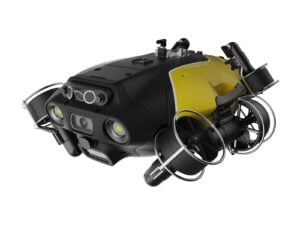
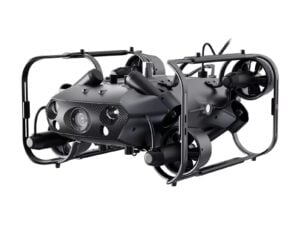
- Hulls, marinas and docks in clear, sheltered water: a FIFISH V6 Expert or CHASING M2 PRO (complete setup under USD 5,000).
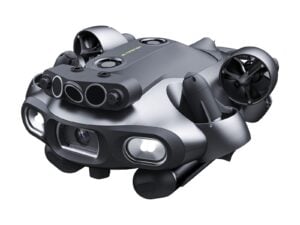
- Piles, quay walls, outfalls and Fraser-influenced water: a CHASING M2 PRO MAX with imaging sonar. The sonar is what finds the target.
- Measurement and repeat surveys to 200 m: FIFISH E-MASTER, with DVL, echosounder and laser scalers built in.
- Deep fjords (200–350 m), stronger current and all-day work: FIFISH X1 or CHASING X.
- Corrosion, UT and CP readings: FIFISH X1 with an NDT kit, or a used inspection-class ROV such as a Saab Seaeye Falcon.
- The fast passes (First and Second Narrows, Active, Porlier, Dodd, Race, Skookumchuck): no ROV works there at full flow. Buy for the slack-water window; the tables below show how long it lasts in each month.
The Salish Sea is not one jobsite. Within an hour of downtown Vancouver you can go from a calm marina in False Creek to a pass where the tide can run at 9 knots, from a 12-metre harbour berth to a fjord more than 200 metres deep, and from clear water into the brown Fraser River plume. Each of those changes what you should buy.
This guide is for people who will own and run the equipment: marinas, marine contractors, shipyards, utilities, aquaculture operators, researchers and survey firms. Pick your site and your job below, and it tells you which vehicle to buy, which accessories to add and why, and when a small drone is the wrong tool.
About us: myROVs (Nautrex Inc.) is an authorised QYSEA FIFISH and CHASING dealer and brokers used industrial ROVs. We recommend by job. Where nothing we sell fits, this guide says so.
1. Find the right setup for your site and job
Choose your operating site (or tap its pin on the map) and the job. You get the site’s conditions, the vehicle and package to buy, the accessories with the reason for each, and the budget range. If your job differs from what is typical at the site, open Fine-tune for your job and enter your deepest point, the current you’ll work in, the visibility or an all-day work pattern; the setup updates and tells you what changed.
Recommendations follow from each site’s typical depth, current and visibility, and from manufacturer specifications. Your exact location can differ; we confirm the full setup, accessory fit and the depth rating of the complete assembly in writing before you buy.
2. Your operating site, in detail
Each site below describes the water, the work done there and what to buy for each job, with the must-have accessories and a budget range. Tap Why? to open the full reasoning in the Finder.
Coal Harbour & downtown marinas
Vancouver & Burrard Inlet · Sheltered
The marinas along Coal Harbour and the downtown waterfront sit in the most sheltered corner of Vancouver Harbour. Floats, gangways, piles and mooring chains are close together, and many boats here are large yachts and charter vessels whose owners want quick, documented hull and running-gear checks.
Water depth at the berths is modest, so depth is never the limit. The limits are space and traffic: seaplanes operate from the Vancouver Harbour Flight Centre in Coal Harbour, and you will be launching between moored boats, so a small vehicle with a well-tended tether is the right tool. Visibility varies with the season and with runoff; on bad days the silty bottom stirs easily, so fly above it, not along it.
- Depth
- Berths mostly under ~15 m
- Current
- Weak; set by tide and wind
- Visibility
- Variable; silt stirs easily
- Launch
- From the float, by hand
What to buy for the jobs done here
| Job | Buy | Must-have accessories | Budget (complete setup) | |
|---|---|---|---|---|
| Hull, propeller and running gear | QYSEA FIFISH V6 ExpertM100 package (100 m tether) | None beyond the standard kitAlso worth it: Laser scaler, Spare battery | Under USD 5,000 | Why? → |
| Marina floats, piles and mooring chains | CHASING M2 PROAdvanced Set (two 300 Wh batteries + Floodlight 2) | None beyond the standard kitAlso worth it: Grabber / robotic arm, Laser scaler, Spare battery | Under USD 5,000 | Why? → |
| Search and recovery: lost gear, objects, debris | CHASING M2 PROAdvanced Set (two 300 Wh batteries + Floodlight 2) | None beyond the standard kitAlso worth it: Forward imaging sonar, Grabber / robotic arm, USBL positioning, Spare battery | Under USD 5,000 | Why? → |
Watch out for
- Seaplane operating area: keep tether and any support boat clear of the water lanes.
- Tight berths: a tender should handle the tether so it never reaches a propeller or a mooring line.
- Ask the marina before diving between other owners’ boats.
False Creek & Granville Island
Vancouver & Burrard Inlet · Sheltered
False Creek is a shallow, enclosed inlet lined with marinas, including the City of Vancouver’s Heather Civic Marina and Burrard Civic Marina, plus Granville Island’s docks and a constant flow of small passenger ferries. It is the easiest water in the region to fly an ROV in, and the most common place to start.
Expect shallow berths, very little current and a soft, muddy bottom that clouds the water the moment a thruster touches it. Much of the public dock infrastructure is ageing, which means regular checks of floats, anchors, chains and piles. A compact drone with good lights covers almost everything here; imaging sonar is only worth it if you search for dropped objects in poor visibility.
- Depth
- Mostly under ~10 m
- Current
- Very weak
- Visibility
- Variable; poor once the bottom is disturbed
- Launch
- From floats and docks
What to buy for the jobs done here
| Job | Buy | Must-have accessories | Budget (complete setup) | |
|---|---|---|---|---|
| Hull, propeller and running gear | QYSEA FIFISH V6 ExpertM100 package (100 m tether) | None beyond the standard kitAlso worth it: Laser scaler, Spare battery | Under USD 5,000 | Why? → |
| Marina floats, piles and mooring chains | CHASING M2 PROAdvanced Set (two 300 Wh batteries + Floodlight 2) | None beyond the standard kitAlso worth it: Grabber / robotic arm, Laser scaler, Spare battery | Under USD 5,000 | Why? → |
| Search and recovery: lost gear, objects, debris | CHASING M2 PROAdvanced Set (two 300 Wh batteries + Floodlight 2) | None beyond the standard kitAlso worth it: Forward imaging sonar, Grabber / robotic arm, USBL positioning, Spare battery | Under USD 5,000 | Why? → |
| Environmental, habitat and research observation | QYSEA FIFISH V6 ExpertM100 package (100 m tether) | None beyond the standard kitAlso worth it: Water / sediment sampler, USBL positioning, Spare battery | Under USD 5,000 | Why? → |
Watch out for
- Busy small-ferry routes: keep the support boat out of the fairways.
- Mud bottom: trim the vehicle slightly buoyant and stay off the seabed.
- Public docks are city assets; ask the operator before inspecting them.
Burrard Inlet port terminals
Vancouver & Burrard Inlet · Moderate current
Between the narrows, Burrard Inlet is lined on both shores with deep-sea terminals: container, bulk, grain and liquid-cargo berths, with their concrete and steel piles, fender systems and quay walls. This is commercial infrastructure, inspected by marine contractors, terminal engineering teams and surveyors.
The water is layered: DFO describes a warmer, low-salinity top layer of about 5 m over colder sea water, and Fraser River water reaches the outer harbour, so visibility can change with depth and season. Current inside the harbour is moderate, but it builds toward First and Second Narrows. This is Canada’s busiest port, so planning the surface side (permission from the terminal, traffic awareness, a safe boat position) is as important as choosing the vehicle.
- Depth
- Berth faces to ~20 m; deeper mid-inlet
- Current
- Moderate; builds toward the narrows
- Visibility
- Variable, with layers
- Launch
- From the wharf or a small workboat
What to buy for the jobs done here
| Job | Buy | Must-have accessories | Budget (complete setup) | |
|---|---|---|---|---|
| Port piles, wharves, quay walls and fenders | CHASING M2 PRO MAXAdvanced Set (two 300 Wh batteries, 200 m E-Reel) | Forward imaging sonarAlso worth it: Distance-lock sonar, Laser scaler, Spare battery | USD 5,000–15,000 | Why? → |
| Hull, propeller and running gear | QYSEA FIFISH V6 ExpertM200 package (200 m tether) | None beyond the standard kitAlso worth it: Laser scaler, Spare battery | Under USD 5,000 | Why? → |
| Corrosion work: UT thickness and CP readings | QYSEA FIFISH X1standard package (350 m tether, surface power) | Ultrasonic thickness (UT) gauge, Cathodic-protection (CP) probe, Forward imaging sonarAlso worth it: USBL positioning, Laser scaler | USD 15,000–60,000 | Why? → |
| Outfalls, intakes, pipelines and cables | CHASING M2 PRO MAXAdvanced Set (two 300 Wh batteries, 200 m E-Reel) | Forward imaging sonar, USBL positioning, Long tether (300–400 m)Also worth it: Shore (surface) power | USD 5,000–15,000 | Why? → |
| Search and recovery: lost gear, objects, debris | CHASING M2 PROAdvanced Set (two 300 Wh batteries + Floodlight 2) | None beyond the standard kitAlso worth it: Forward imaging sonar, Grabber / robotic arm, USBL positioning, Spare battery | Under USD 5,000 | Why? → |
Watch out for
- Port of Vancouver traffic-control zone: coordinate with the terminal and port before working near berths.
- Ships moving on and off berths: never deploy near an active berth without clearance.
- Layered water can mean a different current at depth than at the surface.
First Narrows (Lions Gate)
Vancouver & Burrard Inlet · Strong tidal current
First Narrows, under the Lions Gate Bridge, is the harbour’s front door: the deep-sea shipping channel, bridge foundations, the Capilano River mouth and Metro Vancouver’s Lions Gate wastewater outfall all sit in a short, fast stretch of water.
This is a tidal-current site first. CHS predictions show a typical daily maximum around 4 knots and spring-tide peaks near 6 knots, which is more than any portable ROV can fight. Work here happens around slack water, and the length of that window, not the vehicle’s top speed, is what decides your productivity. Add a constant parade of ships and you need a support boat, a lookout and port coordination.
- Depth
- Channel ~15–20 m
- Current
- Strong: typical daily max ~4.2 kn, peaks ~5.7 kn
- Visibility
- Variable
- Launch
- Workboat
Tidal current through the year at First Narrows (CHS 07721)
Strongest predicted current each month, knots. Typical day: about 4.2 kn. Compact drones work comfortably to about 1.5 kn.
What to buy for the jobs done here
| Job | Buy | Must-have accessories | Budget (complete setup) | |
|---|---|---|---|---|
| Port piles, wharves, quay walls and fenders | CHASING M2 PRO MAXAdvanced Set (two 300 Wh batteries, 200 m E-Reel) | Forward imaging sonarAlso worth it: Distance-lock sonar, Laser scaler, Spare battery | USD 5,000–15,000 | Why? → |
| Outfalls, intakes, pipelines and cables | CHASING M2 PRO MAXAdvanced Set (two 300 Wh batteries, 200 m E-Reel) | Forward imaging sonar, USBL positioning, Long tether (300–400 m)Also worth it: Shore (surface) power | USD 5,000–15,000 | Why? → |
| Measured survey, mapping and repeat transects | QYSEA FIFISH E-MASTERE-MASTER NAVI package (adds Q-DVL station lock) | USBL positioningAlso worth it: Forward imaging sonar, Spare battery | USD 5,000–15,000 | Why? → |
| Search and recovery: lost gear, objects, debris | CHASING M2 PROAdvanced Set (two 300 Wh batteries + Floodlight 2) | None beyond the standard kitAlso worth it: Forward imaging sonar, Grabber / robotic arm, USBL positioning, Spare battery | Under USD 5,000 | Why? → |
Watch out for
- Work only around slack water; check the CHS First Narrows (07721) prediction for the day.
- Main shipping channel: port coordination is required.
- Current can turn earlier or later close to shore and structures than at the station.
Second Narrows
Vancouver & Burrard Inlet · Strong tidal current
Second Narrows carries the Ironworkers Memorial Bridge and the rail bridge, with terminals and industrial waterfront on both sides and liquid-bulk berths just to the east. Bridge piers, fender systems and berth structures are the typical underwater targets.
It is slightly faster than First Narrows: CHS predicts a typical daily maximum around 4.5 knots and peaks around 6.5 knots. The current station here is operated by the Port of Vancouver. As at First Narrows, buy for a slack-water work window and pick a vehicle that can finish its job inside that window, which usually means more thrust and good positioning.
- Depth
- ~20 m and more in the channel
- Current
- Strong: typical daily max ~4.5 kn, peaks ~6.5 kn
- Visibility
- Variable
- Launch
- Workboat
Tidal current through the year at Second Narrows (CHS 07745)
Strongest predicted current each month, knots. Typical day: about 4.5 kn. Compact drones work comfortably to about 1.5 kn.
What to buy for the jobs done here
| Job | Buy | Must-have accessories | Budget (complete setup) | |
|---|---|---|---|---|
| Port piles, wharves, quay walls and fenders | CHASING M2 PRO MAXAdvanced Set (two 300 Wh batteries, 200 m E-Reel) | Forward imaging sonarAlso worth it: Distance-lock sonar, Laser scaler, Spare battery | USD 5,000–15,000 | Why? → |
| Corrosion work: UT thickness and CP readings | QYSEA FIFISH X1standard package (350 m tether, surface power) | Ultrasonic thickness (UT) gauge, Cathodic-protection (CP) probe, Forward imaging sonarAlso worth it: USBL positioning, Laser scaler | USD 15,000–60,000 | Why? → |
| Measured survey, mapping and repeat transects | QYSEA FIFISH E-MASTERE-MASTER NAVI package (adds Q-DVL station lock) | USBL positioningAlso worth it: Forward imaging sonar, Spare battery | USD 5,000–15,000 | Why? → |
| Search and recovery: lost gear, objects, debris | CHASING M2 PROAdvanced Set (two 300 Wh batteries + Floodlight 2) | None beyond the standard kitAlso worth it: Forward imaging sonar, Grabber / robotic arm, USBL positioning, Spare battery | Under USD 5,000 | Why? → |
Watch out for
- Slack-water work only; check CHS station 07745.
- Bridge piers create eddies and sudden changes in flow direction.
- Heavy commercial traffic; port coordination required.
Indian Arm & Deep Cove
Vancouver & Burrard Inlet · Sheltered
Indian Arm is a steep-sided fjord running north from Burrard Inlet, with marinas at Deep Cove, a public wharf at Belcarra, cabins and floats along its shores, BC Hydro’s Buntzen powerhouses on the east side and a park along much of its length. It is a destination for researchers and divers drawn to its walls and deep water.
The surface looks calm, but the arm reaches about 220 m, deeper than any 200 m-rated drone. A shallow sill near the mouth limits deep-water exchange, so the deep basin behaves very differently from the busy narrows outside. For floats and moorings near shore a compact drone is plenty; for the walls and basin floor, choose the vehicle by your deepest target and bring a long tether and positioning.
- Depth
- Fjord to ~220 m
- Current
- Weak inside the arm
- Visibility
- Often better than the outer harbour
- Launch
- Dock or small boat
What to buy for the jobs done here
| Job | Buy | Must-have accessories | Budget (complete setup) | |
|---|---|---|---|---|
| Deep wall and seabed observation (100 m+) | QYSEA FIFISH X1standard package (350 m tether, surface power) | Long tether (300–400 m)Also worth it: USBL positioning, Extra floodlights | USD 15,000–60,000 | Why? → |
| Environmental, habitat and research observation | QYSEA FIFISH V6 ExpertM100 package (100 m tether) | None beyond the standard kitAlso worth it: Water / sediment sampler, USBL positioning, Spare battery | Under USD 5,000 | Why? → |
| Marina floats, piles and mooring chains | CHASING M2 PROAdvanced Set (two 300 Wh batteries + Floodlight 2) | None beyond the standard kitAlso worth it: Grabber / robotic arm, Laser scaler, Spare battery | Under USD 5,000 | Why? → |
| Search and recovery: lost gear, objects, debris | CHASING M2 PROAdvanced Set (two 300 Wh batteries + Floodlight 2) | None beyond the standard kitAlso worth it: Grabber / robotic arm, USBL positioning, Spare battery | Under USD 5,000 | Why? → |
Watch out for
- Deeper than it looks: ~220 m in the basin.
- Long tether runs on steep walls snag easily; plan your descent line.
- Much of the shoreline is parkland; check permits for research work.
English Bay & ship anchorages
Vancouver & Burrard Inlet · Moderate current
English Bay is the open approach to Vancouver Harbour, with deep-sea ships waiting at anchor, beaches and seawalls along its south and east shores, and shallow banks off Spanish Banks. Work here ranges from searching for lost gear to environmental survey and checks of shoreline infrastructure.
It is exposed to wind and waves from the Strait of Georgia, and the Fraser River plume reaches it, so visibility can drop quickly in late spring. Current is moderate but tide and wind combine. Plan around weather as much as tide, and expect to work from a boat rather than a dock.
- Depth
- Mostly under 100 m
- Current
- Moderate; tide plus wind
- Visibility
- Variable; Fraser influence
- Launch
- Workboat
What to buy for the jobs done here
| Job | Buy | Must-have accessories | Budget (complete setup) | |
|---|---|---|---|---|
| Search and recovery: lost gear, objects, debris | CHASING M2 PROAdvanced Set (two 300 Wh batteries + Floodlight 2) | None beyond the standard kitAlso worth it: Forward imaging sonar, Grabber / robotic arm, USBL positioning, Spare battery | Under USD 5,000 | Why? → |
| Measured survey, mapping and repeat transects | QYSEA FIFISH E-MASTERE-MASTER NAVI package (adds Q-DVL station lock) | USBL positioningAlso worth it: Forward imaging sonar, Spare battery | USD 5,000–15,000 | Why? → |
| Environmental, habitat and research observation | QYSEA FIFISH V6 ExpertM200 package (200 m tether) | None beyond the standard kitAlso worth it: Water / sediment sampler, USBL positioning, Spare battery | Under USD 5,000 | Why? → |
| Outfalls, intakes, pipelines and cables | CHASING M2 PRO MAXAdvanced Set (two 300 Wh batteries, 200 m E-Reel) | Forward imaging sonar, USBL positioning, Long tether (300–400 m)Also worth it: Shore (surface) power | USD 5,000–15,000 | Why? → |
Watch out for
- Exposed to westerly wind and chop; small boats need a weather window.
- Ships at anchor swing with the tide; keep well clear.
- Fraser plume can reduce visibility, especially in late spring.
Fraser River North Arm
Fraser River & delta · Moderate current
The North Arm runs past the industrial waterfronts of Vancouver, Burnaby and Richmond: log-boom storage, barge terminals, small shipyards, marinas and boathouses, ending at Iona Island and Metro Vancouver’s wastewater plant there.
River current flows all the time here, strongest on the ebb and during the spring freshet, when the Fraser rises from roughly 300 m³/s in winter toward 10,000 m³/s. The water carries a heavy load of silt, so camera visibility is often poor and can be close to zero in early summer. Floating debris and log booms snag tethers. For anything beyond a quick look at a float, imaging sonar is the accessory that makes the job possible.
- Depth
- Mostly under ~12 m
- Current
- Constant river flow plus tide
- Visibility
- Poor, worst in freshet
- Launch
- Dock, float or small boat
What to buy for the jobs done here
| Job | Buy | Must-have accessories | Budget (complete setup) | |
|---|---|---|---|---|
| Marina floats, piles and mooring chains | CHASING M2 PRO MAXAdvanced Set (two 300 Wh batteries, 200 m E-Reel) | Forward imaging sonarAlso worth it: Grabber / robotic arm, Laser scaler, Spare battery | USD 5,000–15,000 | Why? → |
| Port piles, wharves, quay walls and fenders | CHASING M2 PRO MAXAdvanced Set (two 300 Wh batteries, 200 m E-Reel) | Forward imaging sonarAlso worth it: Distance-lock sonar, Laser scaler, Spare battery | USD 5,000–15,000 | Why? → |
| Search and recovery: lost gear, objects, debris | CHASING M2 PRO MAXAdvanced Set (two 300 Wh batteries, 200 m E-Reel) | Forward imaging sonarAlso worth it: Grabber / robotic arm, USBL positioning, Spare battery | USD 5,000–15,000 | Why? → |
| Outfalls, intakes, pipelines and cables | CHASING M2 PRO MAXAdvanced Set (two 300 Wh batteries, 200 m E-Reel) | Forward imaging sonar, USBL positioning, Long tether (300–400 m)Also worth it: Shore (surface) power | USD 5,000–15,000 | Why? → |
Watch out for
- Silt-laden water: plan on sonar, not just lights.
- Log booms and floating debris snag tethers; keep the tether short and tended.
- Freshet (roughly May to July) brings the strongest flow and worst visibility.
Fraser Main Arm: New Westminster to Steveston
Fraser River & delta · Moderate current
The Main (South) Arm is the working river: deep-sea and short-sea terminals, New Westminster’s waterfront, the Annacis Island wastewater plant and its riverbed diffuser outfall, crossings and pipelines, and the Steveston fishing harbour near the mouth.
About 87% of the Fraser’s flow reaches the Strait through this arm, and seawater pushes upstream along the bottom as a salt wedge, so flow speed and direction can differ between surface and riverbed. Visibility is poor most of the year and worst in the freshet. Real budgets exist here: Metro Vancouver contracts outfall inspections, and its pipeline-crossing programme monitors cover over submerged pipes. A sonar-equipped professional drone handles most dock and outfall checks; long outfall runs and strong flow call for more power and positioning.
- Depth
- Ship channel ~10–15 m
- Current
- Constant river flow; strongest on ebb and in freshet
- Visibility
- Poor
- Launch
- Dock or workboat
What to buy for the jobs done here
| Job | Buy | Must-have accessories | Budget (complete setup) | |
|---|---|---|---|---|
| Port piles, wharves, quay walls and fenders | CHASING M2 PRO MAXAdvanced Set (two 300 Wh batteries, 200 m E-Reel) | Forward imaging sonarAlso worth it: Distance-lock sonar, Laser scaler, Spare battery | USD 5,000–15,000 | Why? → |
| Outfalls, intakes, pipelines and cables | CHASING M2 PRO MAXAdvanced Set (two 300 Wh batteries, 200 m E-Reel) | Forward imaging sonar, USBL positioning, Long tether (300–400 m)Also worth it: Shore (surface) power | USD 5,000–15,000 | Why? → |
| Marina floats, piles and mooring chains | CHASING M2 PRO MAXAdvanced Set (two 300 Wh batteries, 200 m E-Reel) | Forward imaging sonarAlso worth it: Grabber / robotic arm, Laser scaler, Spare battery | USD 5,000–15,000 | Why? → |
| Hull, propeller and running gear | QYSEA FIFISH V6 ExpertM200 package (200 m tether) | None beyond the standard kitAlso worth it: Laser scaler, Forward imaging sonar, Spare battery | Under USD 5,000 | Why? → |
| Search and recovery: lost gear, objects, debris | CHASING M2 PRO MAXAdvanced Set (two 300 Wh batteries, 200 m E-Reel) | Forward imaging sonarAlso worth it: Grabber / robotic arm, USBL positioning, Spare battery | USD 5,000–15,000 | Why? → |
Watch out for
- Imaging sonar is essential for structure work in this water.
- Salt wedge: current near the bottom may differ from the surface.
- Commercial river traffic and tugs with tows; work from a well-placed boat.
Roberts Bank & Tsawwassen
Fraser River & delta · Moderate current
Roberts Bank holds Deltaport container terminal, Westshore coal terminal and, just south, the Tsawwassen ferry terminal, all built out on causeways across wide, shallow tidal flats at the edge of the Fraser delta.
Terminal berths are deep, but the approaches are shallow banks exposed to wind across the open Strait, and the Fraser plume moves across the area with the tide. The port authority runs continuing field studies of sediment, turbidity and water quality here. Expect berth-structure inspection, environmental monitoring and ferry hull checks, all of which depend on a weather window as much as a tide window.
- Depth
- Deep berths; very shallow flats
- Current
- Moderate; tide and wind
- Visibility
- Variable; plume-dependent
- Launch
- Workboat or terminal wharf with permission
What to buy for the jobs done here
| Job | Buy | Must-have accessories | Budget (complete setup) | |
|---|---|---|---|---|
| Port piles, wharves, quay walls and fenders | CHASING M2 PRO MAXAdvanced Set (two 300 Wh batteries, 200 m E-Reel) | Forward imaging sonarAlso worth it: Distance-lock sonar, Laser scaler, Spare battery | USD 5,000–15,000 | Why? → |
| Measured survey, mapping and repeat transects | QYSEA FIFISH E-MASTERE-MASTER NAVI package (adds Q-DVL station lock) | USBL positioningAlso worth it: Forward imaging sonar, Spare battery | USD 5,000–15,000 | Why? → |
| Environmental, habitat and research observation | QYSEA FIFISH V6 ExpertM200 package (200 m tether) | None beyond the standard kitAlso worth it: Water / sediment sampler, USBL positioning, Spare battery | Under USD 5,000 | Why? → |
| Hull, propeller and running gear | QYSEA FIFISH V6 ExpertM200 package (200 m tether) | None beyond the standard kitAlso worth it: Laser scaler, Spare battery | Under USD 5,000 | Why? → |
Watch out for
- Exposed causeways: wind and chop limit small-boat work.
- Fraser plume moves with the tide; visibility can change within hours.
- Terminal security and port coordination required.
Howe Sound: Horseshoe Bay, Gibsons & Squamish
Howe Sound & Sunshine Coast · Moderate current
Howe Sound is a fjord with busy shores: BC Ferries terminals at Horseshoe Bay and Langdale, marinas at Gibsons and Snug Cove, Squamish Terminals at its head, and protected glass sponge reefs in its waters.
It reaches about 285 m deep, and the Squamish River lays a fresh, silty layer over the upper Sound in the spring freshet. Natural Resources Canada documents frequent underwater sediment flows off the Squamish delta during river floods, so survey near the delta front needs a specialist review. Near-shore marina, terminal and hull work needs only a compact drone; deep walls and reef survey need the depth rating, tether and positioning to match.
- Depth
- To ~285 m in the basin
- Current
- Moderate; wind-driven at the surface
- Visibility
- Variable; silty upper Sound in freshet
- Launch
- Dock, float or workboat
What to buy for the jobs done here
| Job | Buy | Must-have accessories | Budget (complete setup) | |
|---|---|---|---|---|
| Marina floats, piles and mooring chains | CHASING M2 PROAdvanced Set (two 300 Wh batteries + Floodlight 2) | None beyond the standard kitAlso worth it: Grabber / robotic arm, Laser scaler, Spare battery | Under USD 5,000 | Why? → |
| Port piles, wharves, quay walls and fenders | CHASING M2 PRO MAXAdvanced Set (two 300 Wh batteries, 200 m E-Reel) | Forward imaging sonarAlso worth it: Distance-lock sonar, Laser scaler, Spare battery | USD 5,000–15,000 | Why? → |
| Deep wall and seabed observation (100 m+) | QYSEA FIFISH X1standard package (350 m tether, surface power) | Long tether (300–400 m)Also worth it: USBL positioning, Extra floodlights | USD 15,000–60,000 | Why? → |
| Environmental, habitat and research observation | QYSEA FIFISH V6 ExpertM200 package (200 m tether) | None beyond the standard kitAlso worth it: Water / sediment sampler, USBL positioning, Spare battery | Under USD 5,000 | Why? → |
| Hull, propeller and running gear | QYSEA FIFISH V6 ExpertM200 package (200 m tether) | None beyond the standard kitAlso worth it: Laser scaler, Spare battery | Under USD 5,000 | Why? → |
Watch out for
- Glass sponge reefs are protected; avoid bottom contact and check DFO marine-refuge rules.
- Squamish delta: underwater sediment flows during floods.
- Strong inflow and outflow winds can make the surface rough.
Sechelt Inlet & Skookumchuck Narrows
Howe Sound & Sunshine Coast · Sheltered
Sechelt Inlet is a long, sheltered inlet behind the Sunshine Coast, with Porpoise Bay at Sechelt, cabins and floats along its shores, and aquaculture tenures. Its only connection to the sea is Skookumchuck Narrows, home of the Sechelt Rapids.
Inside the inlet the water is calm and current is weak, which suits compact drones for shellfish, float and habitat work. The rapids are another world: CHS predicts a typical daily maximum near 13 knots and peaks around 16 knots, among the fastest tidal currents in the region. No ROV works there except in the shortest slack windows, and a vehicle that drifts near the narrows on a running tide can be lost.
- Depth
- Deep basins inside the inlet
- Current
- Weak inside; extreme at the rapids
- Visibility
- Variable; plankton blooms in spring
- Launch
- Dock, float or small boat
Tidal current through the year at Sechelt Rapids (CHS 07845)
Strongest predicted current each month, knots. Typical day: about 12.7 kn. Compact drones work comfortably to about 1.5 kn.
What to buy for the jobs done here
| Job | Buy | Must-have accessories | Budget (complete setup) | |
|---|---|---|---|---|
| Shellfish and aquaculture gear | QYSEA FIFISH E-GOE200 A package (200 m tether + robotic arm) | None beyond the standard kitAlso worth it: Grabber / robotic arm, Water / sediment sampler, Spare battery | USD 5,000–15,000 | Why? → |
| Environmental, habitat and research observation | QYSEA FIFISH V6 ExpertM100 package (100 m tether) | None beyond the standard kitAlso worth it: Water / sediment sampler, USBL positioning, Spare battery | Under USD 5,000 | Why? → |
| Marina floats, piles and mooring chains | CHASING M2 PROAdvanced Set (two 300 Wh batteries + Floodlight 2) | None beyond the standard kitAlso worth it: Grabber / robotic arm, Laser scaler, Spare battery | Under USD 5,000 | Why? → |
| Deep wall and seabed observation (100 m+) | QYSEA FIFISH X1standard package (350 m tether, surface power) | Long tether (300–400 m)Also worth it: USBL positioning, Extra floodlights | USD 15,000–60,000 | Why? → |
Watch out for
- Sechelt Rapids (CHS 07845): typical daily max ~12.7 kn, peaks ~16 kn. Stay well clear except at slack.
- Aquaculture lines and nets are a tether hazard.
- Check tenure holder permission before inspecting farm gear.
Open Strait of Georgia
Strait of Georgia · Moderate current
The open Strait between the mainland and Vancouver Island carries subsea power and telecom cables, outfalls, moorings and navigation aids, and is a major research area for DFO, universities and stewardship groups.
It averages about 155 m deep and reaches about 441 m just south of Merry Island. Wind, ship traffic and the Fraser plume all play a part, and every job is a boat job. Choose the vehicle by the deepest target and the time on the bottom: a 200 m survey drone covers defined targets on the slopes, a 350 m industrial drone covers most of the basin, and beyond 350 m you need a 1,000 m-rated inspection ROV with the boat and tether to match.
- Depth
- Average ~155 m; maximum ~441 m
- Current
- Moderate; tide, wind and plume
- Visibility
- Variable
- Launch
- Workboat or vessel
What to buy for the jobs done here
| Job | Buy | Must-have accessories | Budget (complete setup) | |
|---|---|---|---|---|
| Measured survey, mapping and repeat transects | QYSEA FIFISH E-MASTERE-MASTER NAVI package (adds Q-DVL station lock) | USBL positioningAlso worth it: Forward imaging sonar, Spare battery | USD 5,000–15,000 | Why? → |
| Deep wall and seabed observation (100 m+) | VideoRay Mission Specialist Defender1,000 m configuration with sonar and positioning, sourced | Long tether (300–400 m)Also worth it: USBL positioning, Extra floodlights, DVL (Doppler velocity log) | USD 60,000–250,000 (typically used) | Why? → |
| Outfalls, intakes, pipelines and cables | CHASING M2 PRO MAXAdvanced Set (two 300 Wh batteries, 200 m E-Reel) | Forward imaging sonar, USBL positioning, Long tether (300–400 m)Also worth it: Shore (surface) power | USD 5,000–15,000 | Why? → |
| Search and recovery: lost gear, objects, debris | CHASING M2 PROAdvanced Set (two 300 Wh batteries + Floodlight 2) | None beyond the standard kitAlso worth it: Forward imaging sonar, Grabber / robotic arm, USBL positioning, Spare battery | Under USD 5,000 | Why? → |
| Environmental, habitat and research observation | CHASING M2 PROAdvanced Set (two 300 Wh batteries + Floodlight 2) | None beyond the standard kitAlso worth it: Water / sediment sampler, USBL positioning, Spare battery | Under USD 5,000 | Why? → |
Watch out for
- Exposed: wind and sea state limit launch and recovery.
- Deep-sea shipping lanes cross the Strait.
- A deep-rated vehicle also needs a tether, positioning and boat that can handle it.
Gulf Islands harbours & bays
Gulf Islands & passes · Sheltered
Ganges Harbour, Montague Harbour, Bedwell Harbour, Silva Bay and dozens of smaller bays, hold marinas, government wharves, private docks, mooring buoys and shellfish gear. This is where many owner-operators, marinas and island communities need a simple, dependable inspection tool.
The bays are sheltered and usually clearer than the mainland side, so a camera with good lights does most jobs. The catch is that several of these harbours sit close to some of the fastest passes in the region; treat the bay and the pass beside it as two different sites. Mooring chains, anchor blocks and shellfish longlines are the common targets, and all of them are tether-snagging hazards.
- Depth
- Mostly under ~30 m
- Current
- Weak in the bays
- Visibility
- Usually better than the mainland side
- Launch
- Dock or float
What to buy for the jobs done here
| Job | Buy | Must-have accessories | Budget (complete setup) | |
|---|---|---|---|---|
| Marina floats, piles and mooring chains | CHASING M2 PROAdvanced Set (two 300 Wh batteries + Floodlight 2) | None beyond the standard kitAlso worth it: Grabber / robotic arm, Laser scaler, Spare battery | Under USD 5,000 | Why? → |
| Hull, propeller and running gear | QYSEA FIFISH V6 ExpertM100 package (100 m tether) | None beyond the standard kitAlso worth it: Laser scaler, Spare battery | Under USD 5,000 | Why? → |
| Shellfish and aquaculture gear | QYSEA FIFISH E-GOE200 A package (200 m tether + robotic arm) | None beyond the standard kitAlso worth it: Grabber / robotic arm, Water / sediment sampler, Spare battery | USD 5,000–15,000 | Why? → |
| Environmental, habitat and research observation | QYSEA FIFISH V6 ExpertM100 package (100 m tether) | None beyond the standard kitAlso worth it: Water / sediment sampler, USBL positioning, Spare battery | Under USD 5,000 | Why? → |
| Search and recovery: lost gear, objects, debris | CHASING M2 PROAdvanced Set (two 300 Wh batteries + Floodlight 2) | None beyond the standard kitAlso worth it: Grabber / robotic arm, USBL positioning, Spare battery | Under USD 5,000 | Why? → |
Watch out for
- Don’t drift from a bay into a nearby pass on a running tide.
- Mooring chains and longlines snag tethers; use a tender.
- Small public wharves: ask the harbour authority first.
Active Pass & Porlier Pass
Gulf Islands & passes · Strong tidal current
Active Pass carries the main BC Ferries route between Tsawwassen and Swartz Bay through a narrow, winding channel between Galiano and Mayne islands. Porlier Pass, further north between Galiano and Valdes, is narrower and faster.
CHS predicts a typical daily maximum of about 4.5 knots in Active Pass, with peaks around 6.5 knots, and about 7 knots in Porlier Pass, with peaks above 9 knots. Add large ferries in Active Pass and this is specialist water: survey, habitat or search work done in short slack windows from a well-handled boat, with the most thrust you can justify.
- Depth
- Varies along each pass
- Current
- Strong to extreme
- Visibility
- Usually good
- Launch
- Workboat
Tidal current through the year at Active Pass (CHS 07527)
Strongest predicted current each month, knots. Typical day: about 4.5 kn. Compact drones work comfortably to about 1.5 kn.
What to buy for the jobs done here
| Job | Buy | Must-have accessories | Budget (complete setup) | |
|---|---|---|---|---|
| Measured survey, mapping and repeat transects | QYSEA FIFISH E-MASTERE-MASTER NAVI package (adds Q-DVL station lock) | USBL positioningAlso worth it: Forward imaging sonar, Spare battery | USD 5,000–15,000 | Why? → |
| Environmental, habitat and research observation | QYSEA FIFISH V6 ExpertM200 package (200 m tether) | None beyond the standard kitAlso worth it: Water / sediment sampler, USBL positioning, Spare battery | Under USD 5,000 | Why? → |
| Search and recovery: lost gear, objects, debris | CHASING M2 PROAdvanced Set (two 300 Wh batteries + Floodlight 2) | None beyond the standard kitAlso worth it: Grabber / robotic arm, USBL positioning, Spare battery | Under USD 5,000 | Why? → |
Watch out for
- BC Ferries traffic in Active Pass: coordinate and keep a lookout.
- Porlier Pass (CHS 07438): typical daily max ~7.1 kn, peaks ~9.2 kn.
- Slack timing differs between the two passes; check each station.
Dodd Narrows & Gabriola Passage
Gulf Islands & passes · Extreme tidal current
Dodd Narrows, just south of Nanaimo, is a short, very narrow gap used by small craft and tug-and-barge traffic. Gabriola Passage, near Silva Bay, is the other fast passage at this end of the Gulf Islands.
CHS predicts a typical daily maximum of about 7 knots at Dodd Narrows, peaking above 9 knots, and about 6 knots in Gabriola Passage, peaking above 8 knots. That is two to three times the strongest portable ROV rating. Any work here is slack-water work from a boat with a skilled skipper, and on most days the usable window is short.
- Depth
- Shallow, narrow channels
- Current
- Extreme: Dodd typical daily max ~7.1 kn, peaks ~9.1 kn
- Visibility
- Usually good
- Launch
- Workboat
Tidal current through the year at Dodd Narrows (CHS 07487)
Strongest predicted current each month, knots. Typical day: about 7.1 kn. Compact drones work comfortably to about 1.5 kn.
What to buy for the jobs done here
| Job | Buy | Must-have accessories | Budget (complete setup) | |
|---|---|---|---|---|
| Measured survey, mapping and repeat transects | QYSEA FIFISH E-MASTERE-MASTER NAVI package (adds Q-DVL station lock) | USBL positioningAlso worth it: Forward imaging sonar, Spare battery | USD 5,000–15,000 | Why? → |
| Environmental, habitat and research observation | QYSEA FIFISH V6 ExpertM200 package (200 m tether) | None beyond the standard kitAlso worth it: Water / sediment sampler, USBL positioning, Spare battery | Under USD 5,000 | Why? → |
| Search and recovery: lost gear, objects, debris | CHASING M2 PROAdvanced Set (two 300 Wh batteries + Floodlight 2) | None beyond the standard kitAlso worth it: Grabber / robotic arm, USBL positioning, Spare battery | Under USD 5,000 | Why? → |
Watch out for
- Extreme current: plan to the minute around slack.
- Tug and barge tows use Dodd Narrows; keep the channel clear.
- Recovery plan: decide in advance when you abort.
Nanaimo Harbour & Departure Bay
Nanaimo · Sheltered
Nanaimo packs a deep-sea port (Assembly Wharf), BC Ferries at Departure Bay and Duke Point, seaplanes, a large boat basin and private marinas into one compact harbour. Hull checks, float and fender inspections, mooring chains and berth structures are the everyday jobs.
Inside the harbour current is usually manageable; Assembly Wharf’s deep-sea berths have roughly 12 m alongside. Seaplanes and ferries mean surface planning matters, and the Port of Nanaimo has issued ROV-inspection navigation notices before, so expect to notify the port for work near commercial berths. Dodd Narrows is just south and is a completely different site.
- Depth
- Berths ~12 m; harbour mostly under 30 m
- Current
- Usually weak to moderate
- Visibility
- Variable
- Launch
- Dock, float or workboat
What to buy for the jobs done here
| Job | Buy | Must-have accessories | Budget (complete setup) | |
|---|---|---|---|---|
| Hull, propeller and running gear | QYSEA FIFISH V6 ExpertM100 package (100 m tether) | None beyond the standard kitAlso worth it: Laser scaler, Spare battery | Under USD 5,000 | Why? → |
| Marina floats, piles and mooring chains | CHASING M2 PROAdvanced Set (two 300 Wh batteries + Floodlight 2) | None beyond the standard kitAlso worth it: Grabber / robotic arm, Laser scaler, Spare battery | Under USD 5,000 | Why? → |
| Port piles, wharves, quay walls and fenders | CHASING M2 PRO MAXAdvanced Set (two 300 Wh batteries, 200 m E-Reel) | Forward imaging sonarAlso worth it: Distance-lock sonar, Laser scaler, Spare battery | USD 5,000–15,000 | Why? → |
| Corrosion work: UT thickness and CP readings | QYSEA FIFISH X1standard package (350 m tether, surface power) | Ultrasonic thickness (UT) gauge, Cathodic-protection (CP) probe, Forward imaging sonarAlso worth it: USBL positioning, Laser scaler | USD 15,000–60,000 | Why? → |
| Search and recovery: lost gear, objects, debris | CHASING M2 PROAdvanced Set (two 300 Wh batteries + Floodlight 2) | None beyond the standard kitAlso worth it: Forward imaging sonar, Grabber / robotic arm, USBL positioning, Spare battery | Under USD 5,000 | Why? → |
Watch out for
- Notify the port for work near commercial berths and ferry terminals.
- Seaplane operating areas in the harbour.
- Dodd Narrows, just south, has extreme current.
Victoria Inner Harbour, Ogden Point & the Gorge
Victoria & Saanich · Sheltered
Victoria Harbour combines marinas, Fisherman’s Wharf, ferry and passenger terminals, the Ogden Point cruise terminal and breakwater, and a certified water airport. Upstream, the Gorge Waterway narrows to a reversing tidal rapid under the Tillicum Bridge.
Transport Canada notes up to 100 aircraft movements a day in the harbour, with set traffic lanes and no anchoring, so plan where your boat will sit before you plan the dive. Water is usually clearer than the mainland side and current is weak in the main harbour. At the Gorge, CHS predicts a typical daily maximum around 5 knots and peaks near 10 knots: treat it as a separate, slack-only site.
- Depth
- Mostly under ~20 m
- Current
- Weak; extreme at the Gorge
- Visibility
- Usually good
- Launch
- Dock, float or small boat
Tidal current through the year at Gorge (Tillicum Bridge) (CHS 07129)
Strongest predicted current each month, knots. Typical day: about 5.3 kn. Compact drones work comfortably to about 1.5 kn.
What to buy for the jobs done here
| Job | Buy | Must-have accessories | Budget (complete setup) | |
|---|---|---|---|---|
| Hull, propeller and running gear | QYSEA FIFISH V6 ExpertM100 package (100 m tether) | None beyond the standard kitAlso worth it: Laser scaler, Spare battery | Under USD 5,000 | Why? → |
| Marina floats, piles and mooring chains | CHASING M2 PROAdvanced Set (two 300 Wh batteries + Floodlight 2) | None beyond the standard kitAlso worth it: Grabber / robotic arm, Laser scaler, Spare battery | Under USD 5,000 | Why? → |
| Port piles, wharves, quay walls and fenders | CHASING M2 PROAdvanced Set (two 300 Wh batteries + Floodlight 2) | None beyond the standard kitAlso worth it: Distance-lock sonar, Laser scaler, Spare battery | Under USD 5,000 | Why? → |
| Search and recovery: lost gear, objects, debris | CHASING M2 PROAdvanced Set (two 300 Wh batteries + Floodlight 2) | None beyond the standard kitAlso worth it: Grabber / robotic arm, USBL positioning, Spare battery | Under USD 5,000 | Why? → |
Watch out for
- Water aerodrome: keep clear of seaplane lanes.
- Traffic scheme: speed limits and no anchoring in the harbour.
- Gorge at Tillicum Bridge (CHS 07129): peaks near 10 kn.
Esquimalt Harbour
Victoria & Saanich · Sheltered
Esquimalt is home to the Royal Canadian Navy’s Pacific fleet at CFB Esquimalt and to the federal Esquimalt Graving Dock, where Seaspan’s Victoria Shipyards repairs and refits ferries, naval and commercial ships. It is the centre of ship-repair inspection on the Island.
The harbour is sheltered and fairly clear, so the vehicle choice is driven by the deliverable: quick visual hull records for a refit plan suit a compact drone, while thickness readings and cathodic-protection surveys need a vehicle that can hold a probe firmly against steel. The Navy itself buys ROV systems here for its divers. Access around naval areas is restricted.
- Depth
- Mostly under ~20 m
- Current
- Weak
- Visibility
- Usually good
- Launch
- Dock or workboat, with access permission
What to buy for the jobs done here
| Job | Buy | Must-have accessories | Budget (complete setup) | |
|---|---|---|---|---|
| Hull, propeller and running gear | QYSEA FIFISH V6 ExpertM100 package (100 m tether) | None beyond the standard kitAlso worth it: Laser scaler, Spare battery | Under USD 5,000 | Why? → |
| Corrosion work: UT thickness and CP readings | QYSEA FIFISH X1standard package (350 m tether, surface power) | Ultrasonic thickness (UT) gauge, Cathodic-protection (CP) probeAlso worth it: Forward imaging sonar, USBL positioning, Laser scaler | USD 15,000–60,000 | Why? → |
| Port piles, wharves, quay walls and fenders | CHASING M2 PROAdvanced Set (two 300 Wh batteries + Floodlight 2) | None beyond the standard kitAlso worth it: Distance-lock sonar, Laser scaler, Spare battery | Under USD 5,000 | Why? → |
| Search and recovery: lost gear, objects, debris | CHASING M2 PROAdvanced Set (two 300 Wh batteries + Floodlight 2) | None beyond the standard kitAlso worth it: Grabber / robotic arm, USBL positioning, Spare battery | Under USD 5,000 | Why? → |
Watch out for
- Naval security zones: access needs permission.
- Ship-repair work often needs engineering-grade records; agree the deliverable first.
- Busy with tugs and ship movements around the dock.
Saanich Inlet & Brentwood Bay
Victoria & Saanich · Sheltered
Saanich Inlet is a quiet fjord on the west side of the Saanich Peninsula, with marinas at Brentwood Bay and Mill Bay. It is one of the most studied inlets on the coast: Ocean Networks Canada runs a seafloor observatory here and DFO’s Institute of Ocean Sciences sits nearby at Patricia Bay.
It reaches about 225 m, with a shallow sill at the mouth, and its deep water is often very low in oxygen, which makes it a favourite for science. There is little current inside. For marina and shoreline work a compact drone is enough; for research on the walls and the basin, pick the vehicle by the deepest target and plan for positioning and data quality.
- Depth
- Fjord to ~225 m
- Current
- Weak
- Visibility
- Usually good
- Launch
- Dock or small boat
What to buy for the jobs done here
| Job | Buy | Must-have accessories | Budget (complete setup) | |
|---|---|---|---|---|
| Deep wall and seabed observation (100 m+) | QYSEA FIFISH X1standard package (350 m tether, surface power) | Long tether (300–400 m)Also worth it: USBL positioning, Extra floodlights | USD 15,000–60,000 | Why? → |
| Environmental, habitat and research observation | QYSEA FIFISH V6 ExpertM100 package (100 m tether) | None beyond the standard kitAlso worth it: Water / sediment sampler, USBL positioning, Spare battery | Under USD 5,000 | Why? → |
| Measured survey, mapping and repeat transects | QYSEA FIFISH E-MASTERE-MASTER NAVI package (adds Q-DVL station lock) | USBL positioningAlso worth it: Forward imaging sonar, Spare battery | USD 5,000–15,000 | Why? → |
| Marina floats, piles and mooring chains | CHASING M2 PROAdvanced Set (two 300 Wh batteries + Floodlight 2) | None beyond the standard kitAlso worth it: Grabber / robotic arm, Laser scaler, Spare battery | Under USD 5,000 | Why? → |
Watch out for
- Deeper than it looks: ~225 m.
- Research instruments on the seafloor: check before working near them.
- Low-oxygen deep water matters for sensors and samples, not for the vehicle.
Race Passage, Haro Strait & Juan de Fuca
Victoria & Saanich · Strong tidal current
South and east of Victoria the water opens up: the Capital Regional District’s outfalls discharge into Juan de Fuca Strait, Race Rocks is a protected area known for its currents and marine life, and Haro Strait carries the deep-sea shipping lane toward Vancouver.
CHS predicts a typical daily maximum of about 5 knots in Race Passage, with peaks around 7 knots, while Juan de Fuca East runs about 2.5 knots on a typical day. Swell and wind matter as much as tide. This is boat-based, weather-dependent work: survey, outfall and habitat jobs done in planned windows with a vehicle that has real thrust and the depth rating for open water.
- Depth
- ~100–250 m in the straits
- Current
- Strong at Race Passage; moderate offshore
- Visibility
- Usually good
- Launch
- Vessel
Tidal current through the year at Race Passage (CHS 07090)
Strongest predicted current each month, knots. Typical day: about 5 kn. Compact drones work comfortably to about 1.5 kn.
What to buy for the jobs done here
| Job | Buy | Must-have accessories | Budget (complete setup) | |
|---|---|---|---|---|
| Measured survey, mapping and repeat transects | QYSEA FIFISH E-MASTERE-MASTER NAVI package (adds Q-DVL station lock) | USBL positioningAlso worth it: Forward imaging sonar, Spare battery | USD 5,000–15,000 | Why? → |
| Environmental, habitat and research observation | QYSEA FIFISH V6 ExpertM200 package (200 m tether) | None beyond the standard kitAlso worth it: Water / sediment sampler, USBL positioning, Spare battery | Under USD 5,000 | Why? → |
| Outfalls, intakes, pipelines and cables | CHASING M2 PRO MAXAdvanced Set (two 300 Wh batteries, 200 m E-Reel) | USBL positioning, Long tether (300–400 m)Also worth it: Forward imaging sonar, Shore (surface) power | USD 5,000–15,000 | Why? → |
| Deep wall and seabed observation (100 m+) | QYSEA FIFISH X1standard package (350 m tether, surface power) | Long tether (300–400 m)Also worth it: USBL positioning, Extra floodlights | USD 15,000–60,000 | Why? → |
Watch out for
- Race Passage (CHS 07090): typical daily max ~5 kn, peaks ~7 kn.
- Exposed to swell and wind; plan a weather window.
- Race Rocks is protected; check rules before working there.
3. Tidal currents through the year
Current is the condition that rules out vehicles most often in Southwest BC. The numbers below come from a full year of Canadian Hydrographic Service (CHS) predictions for each station. [1] The pattern repeats every year with small differences, so you can use it to plan any year.
- It changes every two weeks. Currents run strongest around spring tides (new and full moon) and weakest around neap tides in between.
- It changes through the year. The strongest tides come in the months around the June and December solstices; the gentlest around March and September.
- Every pass has slack water. Even the fastest passes stop and turn. The question for a buyer is how long the workable window lasts, and that depends on how much current your vehicle can handle.
Strongest predicted current, month by month (knots)
| Station | Typical day | Jan | Feb | Mar | Apr | May | Jun | Jul | Aug | Sep | Oct | Nov | Dec |
|---|---|---|---|---|---|---|---|---|---|---|---|---|---|
| First Narrows | 4.2 | 5.7 | 5.1 | 4.7 | 4.8 | 5.2 | 5.6 | 5.7 | 5.5 | 4.8 | 5.2 | 5.1 | 5.5 |
| Second Narrows | 4.5 | 6.5 | 5.8 | 5.6 | 5.7 | 5.7 | 6.3 | 6.5 | 6.3 | 5.7 | 5.8 | 5.8 | 6.2 |
| Active Pass | 4.5 | 6.5 | 5.8 | 5.3 | 5.4 | 5.8 | 6.3 | 6.5 | 6.3 | 5.6 | 5.7 | 5.7 | 6.2 |
| Porlier Pass | 7.1 | 9.1 | 8.5 | 8.1 | 8.8 | 9.2 | 9.2 | 9.1 | 9 | 8.4 | 8.9 | 9 | 9.2 |
| Gabriola Passage | 6.2 | 8.4 | 8 | 7 | 7.2 | 7.3 | 7.4 | 7.8 | 7.9 | 7.1 | 7 | 7 | 7.3 |
| Dodd Narrows | 7.1 | 8.7 | 8.3 | 7.9 | 8.7 | 9.1 | 9 | 8.8 | 8.8 | 8.3 | 8.5 | 8.9 | 8.9 |
| Sechelt Rapids | 12.7 | 16.2 | 15 | 13.6 | 14.9 | 15.2 | 14.8 | 15 | 15.3 | 13.1 | 14.9 | 15.2 | 15.4 |
| Race Passage | 5 | 6.9 | 6 | 5.6 | 5.9 | 6.5 | 6.9 | 6.9 | 6.6 | 5.5 | 6 | 6.4 | 6.9 |
| Juan de Fuca East | 2.5 | 3.4 | 3.2 | 3.1 | 3.3 | 3.5 | 3.6 | 3.6 | 3.5 | 2.9 | 2.9 | 2.9 | 3 |
| Gorge (Tillicum Bridge) | 5.3 | 10 | 8.3 | 6 | 6.8 | 7.9 | 9 | 9.3 | 8.8 | 5.7 | 7.2 | 7.9 | 9.2 |
≤1.5 kn: compact drones OK1.5–3 kn3–5 kn5–8 knover 8 kn
“Typical day” is the median daily maximum. Monthly figures are the strongest predicted current in that month. Predictions are for the reference station; current at your exact spot can be weaker or stronger.
How long can you work around each slack?
Our rule of thumb is to work only while the current at your site is no more than about half the vehicle’s rated figure. That gives these rough working windows around each slack on a typical day:
| Pass | Typical daily max | Compact & pro drones (≈1.5 kn) | Industrial portable (≈2 kn) | High-thrust ROV (≈2.5 kn) | Compact drone, biggest spring tides |
|---|---|---|---|---|---|
| First Narrows | 4.2 kn | 85 min | 120 min | 150 min | 65 min |
| Second Narrows | 4.5 kn | 80 min | 110 min | 140 min | 55 min |
| Active Pass | 4.5 kn | 80 min | 110 min | 140 min | 55 min |
| Porlier Pass | 7.1 kn | 50 min | 70 min | 85 min | 40 min |
| Gabriola Passage | 6.2 kn | 60 min | 80 min | 100 min | 45 min |
| Dodd Narrows | 7.1 kn | 50 min | 70 min | 85 min | 40 min |
| Sechelt Rapids | 12.7 kn | 30 min | 35 min | 45 min | 20 min |
| Race Passage | 5 kn | 70 min | 95 min | 125 min | 50 min |
| Juan de Fuca East | 2.5 kn | 150 min | 220 min | Most of the tide | 100 min |
| Gorge (Tillicum Bridge) | 5.3 kn | 70 min | 90 min | 115 min | 35 min |
Rough estimate from a smooth tidal curve between slacks about 6 hours apart; real slacks can be shorter or longer, especially with mixed tides. Always check the day’s prediction at tides.gc.ca.
Month by month: what else changes
| Month | Tidal currents | Fraser River and visibility | Weather and daylight | Good time for |
|---|---|---|---|---|
| Jan | Among the strongest of the year | Low; local rain runoff | Storm season; ~8.5 h daylight | Sheltered harbour and marina work |
| Feb | Strong | Low | Storms ease; days lengthen | Sheltered work; plan pass work carefully |
| Mar | Gentlest of the year | Starting to rise | Mixed; spring plankton bloom can cloud the Strait | Pass and narrows work (longest slacks) |
| Apr | Moderate | Rising | Settling; ~14 h daylight by month end | Most jobs; check plume before Fraser work |
| May | Building | Freshet begins; silt rising | Calmer; long days | Clear-water sites; sonar for Fraser jobs |
| Jun | Among the strongest | Peak freshet; worst Fraser visibility | ~16 h daylight; calm mornings | Long days in clear water; avoid Fraser camera work |
| Jul | Among the strongest | High, falling | Settled; afternoon inflow winds in inlets | Early-morning work; deep fjords |
| Aug | Strong | Falling | Settled; busy recreational traffic | Most jobs; plan around marina traffic |
| Sep | Gentlest of the year | Low | Settled early, storms begin late | Pass and narrows work; Fraser sonar jobs get easier |
| Oct | Moderate | Low; autumn rain runoff | Storm season starts | Most jobs before the winter weather |
| Nov | Strong | Low; rain runoff | Stormy; short days | Sheltered sites; plan weather windows |
| Dec | Among the strongest | Low | Stormy; ~8 h daylight | Sheltered sites only for most crews |
The Fraser rises from roughly 300 m³/s in winter toward 10,000 m³/s at the freshet, usually peaking in May–June. [2] Tidal-current strength by month comes from the CHS predictions above.
4. Strong current? When a bigger ROV makes sense
A heavier ROV raises the ceiling. Forward thrust grows by a factor of several hundred from a compact drone to a work-class vehicle (log scale below): [21]
But bigger ROVs don’t remove slack-water planning. Operators of a Saab Seaeye Falcon quote a working limit of about 1.5 knots of current; for the larger Seaeye Tiger the figure is about 1 knot, because a bigger vehicle also has a bigger tether and frame for the current to push on. [21] What more thrust buys you is a longer working window, more control near structures and safer recovery.
Compact & pro drones
Up to ~1.5 kn
Sheltered sites any time; passes only at slack.
Inspection-class
Steadier near structures
Heavy sensors, deep water, vessel-based campaigns.
Saab Seaeye Falcon (used), VideoRay Mission Specialist Defender
High-thrust
Built for fast water
Survey lines in strong current from a vessel.
Our advice for the passes: if you only visit a pass occasionally, buy the vehicle that suits the rest of your work and schedule the pass for slack. Step up to an industrial portable ROV if passes are a regular part of your work, and talk to us about a high-thrust ROV only when you must hold survey lines in moving water week after week.
5. Accessories at a glance
The Finder tells you which of these your site and job need, and why. This table is the quick reference.
| Accessory | What it does | Buy it when | Skip it when |
|---|---|---|---|
| Forward imaging sonar | “Sees” shapes through murk: piles, pipes, anchors, debris. Not fine detail. [19] | The camera regularly fails: Fraser water, stirred-up berths, searches | Your sites are clear and shallow |
| Echosounder / altimeter | Measures depth and height above the seabed. Does not look forward. | Survey work (built into the E-MASTER) | You need to find things ahead of you; that’s imaging sonar |
| Distance-lock sonar | Holds a fixed stand-off from a wall or hull | Long quay walls and ship hulls | Open seabed work |
| DVL | Locks position over the seabed; straight, repeatable lines | Survey, deep work, holding still to take readings | Hand-on-structure marina work |
| USBL positioning | Tells you where the vehicle is, from the boat | You must report where a defect or object is | The structure is your reference |
| Laser scaler | Puts a scale on video | Sizing damage, fouling, wear | You need certified measurements |
| Grabber / arm / hook | Retrieves objects and samples | Marinas, search and recovery, aquaculture | Pure inspection |
| UT gauge / CP probe | Measures steel thickness / cathodic protection | An engineer needs corrosion data | Video is the deliverable |
| Long tether & shore power | Reach and all-day running | Outfalls, deep sites, long days | Short jobs close to the launch point |
Accessory fit depends on the exact vehicle and firmware. We confirm compatibility, and the depth rating of the complete assembly, in writing with every quote.
6. The models, compared
Every vehicle the Finder recommends is sold new by myROVs or sourced through our brokerage. Budget ranges cover a complete working setup; see each model page for current prices and packages.
| Model | Depth | Power | Maker’s speed / current figure | Best for in this region | Budget (complete setup) |
|---|---|---|---|---|---|
| QYSEA FIFISH V6 Expert | 100 m | Battery | 3 kn top speed | Hulls, marinas, shellfish gear in clear water | Under USD 5,000 |
| CHASING M2 PRO | 150 m | Battery or shore power | n/p | Hulls, docks, moorings: best value | Under USD 5,000 |
| QYSEA FIFISH E-GO | 100 m | Hot-swap batteries | >3 kn top speed | Aquaculture and heavier tool loads | USD 5,000–15,000 |
| QYSEA FIFISH E-GO Pro | 200 m | Hot-swap batteries | n/p | Modular work to 200 m | USD 5,000–15,000 |
| CHASING M2 PRO MAX | 200 m | Battery or shore power | 3 kn top speed | Murky-water structures with imaging sonar | USD 5,000–15,000 |
| QYSEA FIFISH E-MASTER | 200 m | Hot-swap batteries | >3 kn top speed | Measured survey and repeat transects | USD 5,000–15,000 |
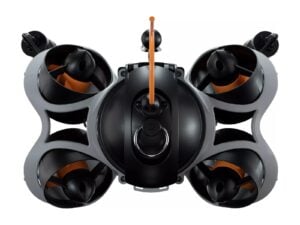
| QYSEA FIFISH X1 | 350 m | Surface power | 4 kn station holding | Current, deep fjords, NDT, all-day work | USD 15,000–60,000 |
| CHASING X | 350 m | Battery or shore power | 4.5 kn flow resistance | Deep fjords, current, 400 m reach | USD 15,000–60,000 |
| Saab Seaeye Falcon (used) | 300 m | Surface power | >3 kn speed | Proven industrial inspection | USD 60,000–250,000 (typically used) |
| VideoRay Mission Specialist Defender | 300 / 1,000 m | Surface power | ~3.8 kn forward | Deep basin, integrated sonar and NDT | USD 60,000–250,000 (typically used) |
| Forum Mohican | 2,000 m | Surface power | 110 kgf thrust | Survey in fast, turbid water | USD 60,000–250,000 (typically used) |
n/p = not published. Each manufacturer measures speed and current differently, so treat these as a rough ranking, not a site limit. [20, 19, 21]
The close calls
- FIFISH V6 Expert or CHASING M2 PRO? Both are excellent hull and marina tools. The V6 Expert is more agile and has the larger tool catalogue; the M2 PRO goes to 150 m and has a simple path to shore power. If imaging sonar is likely, go straight to the M2 PRO MAX. Compare them →
- FIFISH E-MASTER or CHASING M2 PRO MAX? The E-MASTER is for measuring (DVL, echosounder and laser scalers built in). The M2 PRO MAX is for finding things in murky water (the widest imaging-sonar menu). Compare them →
- FIFISH X1 or CHASING X? The X1 runs on surface power with no battery limit, carries 15 kg and has UT and CP kits. The CHASING X has the highest current rating among portable ROVs and a 400 m tether. Compare them →
- When should you go industrial? Deeper than 350 m, several heavy sensors at once, or weeks of work from a vessel. See our used ROV buyer’s checklist.
7. Three packages that cover most jobs here
A. Marina and hull kit
Hulls, floats, chains and shellfish gear in clear, sheltered water.
- QYSEA FIFISH V6 Expert M200 package, or CHASING M2 PRO Advanced Set
- Laser scaler
- Optional: grabber or robotic arm
Under USD 5,000
B. Murky-water structures kit
Piles, quay walls and outfalls in the harbour and Fraser River.
- CHASING M2 PRO MAX Advanced Set
- Imaging sonar (Oculus or Gemini) with integration kit
- Distance-lock sonar
- Optional: USBL positioning
USD 5,000–15,000
C. Deep and industrial kit
Deep fjords, open-water current, NDT and all-day work.
- QYSEA FIFISH X1 or CHASING X (Professional Set)
- Imaging sonar and acoustic positioning
- UT or CP kit for corrosion data
USD 15,000–60,000
Want one of these quoted for your site? Tell us which is closest and where you’ll use it. We’ll confirm accessory fit and the full system’s depth rating, and give you a landed price. Request a package quote →
8. Buy, rent or hire a contractor?
Southwest BC has examples of all three:
- Hire: Metro Vancouver contracts out its wastewater outfall inspections (RFP 25-180, awarded July 2025). Owners of big, infrequently inspected assets often buy the inspection, not the robot. [11]
- Buy: DFO runs a multi-year standing offer for remotely operated vehicles delivered in BC, and its Salish Sea Initiative funded Indigenous stewardship groups to buy ROVs for seafloor monitoring. The Royal Canadian Navy has sought ROV systems for its divers at Esquimalt. [12, 13, 14]
- Own and serve others: Vancouver Island contractors such as Indepth Marine run 300 m Saab Seaeye Falcons with sonar for piers, outfalls and hulls. [15]
| Choose… | When |
|---|---|
| Buy | You inspect monthly or more, need to go at short notice, have staff who can be trained, and video or sonar records are the deliverable. |
| Buy used | You need an industrial ROV and can allow a few weeks for inspection and handover. |
| Rent | You have trained pilots and a defined campaign of weeks or months. |
| Hire a contractor | The job is one-off, high-risk, or needs an engineering-certified report. |
If the ROV will work most of the year, owning usually costs less per working day. Our ROV price guide covers the numbers.
Looking for someone to do the inspection for you? myROVs sells and sources equipment; we don’t run inspection crews. A local ROV service company will be quicker. If you later decide to bring the work in-house, come back and we’ll help you choose.
A note on aquaculture
Federal policy sets a phase-out of open-net-pen salmon farming in BC coastal waters, announced for 30 June 2029, and the policy has been debated since. [16] Check its current status before buying for a salmon site. Shellfish farming and environmental monitoring are not covered by that policy and are the steadier reasons to own a compact drone.
9. Buying and operating in BC: the practical bits
- Price and currency. Our list prices are in USD. We quote the landed cost to your BC address (shipping, duties, taxes and batteries) in writing before you commit.
- Batteries ship as dangerous goods. Transport Canada classes lithium batteries as dangerous goods, which affects how spare packs travel. We plan the shipping route with you. [17]
- Warranty. New QYSEA and CHASING systems carry the manufacturer’s warranty. We confirm terms and the service route with every quote.
- Permissions. There’s no general licence for flying a small inspection ROV, but the site can bring rules: port coordination in Vancouver and Nanaimo, the water-aerodrome lanes in Victoria Harbour, naval security in Esquimalt, protected areas such as Howe Sound’s sponge reefs and Race Rocks, and a DFO review if in-water work could harm fish habitat. [7, 8, 18]
- Training. Compact drones are quick to learn; industrial systems need trained pilots and usually a technician. Ask us what training comes with your package.
10. Before you ask for a quote: 8 questions
Answer these and we can recommend the right system in one reply.
- Where exactly? Water body and site.
- What’s the job, and what do you hand over at the end?
- What’s the deepest point you need to reach?
- How strong is the current there, and can you work at slack?
- How clear is the water in the season you’ll work?
- Will you launch from shore, a dock or a boat?
- How often: weekly, monthly, yearly, once?
- What’s your budget and timeline?
11. Frequently asked questions
What’s the best underwater drone for hull inspection in Vancouver?
For a sheltered berth in reasonably clear water, a FIFISH V6 Expert or CHASING M2 PRO. If the water is often murky, or you inspect ships at commercial terminals, choose a CHASING M2 PRO MAX with imaging sonar.
Can an underwater drone handle Vancouver Harbour currents?
In the inner harbour and at most berths, yes, if you pick your time. At First and Second Narrows the typical daily maximum is around 4–4.5 knots, more than any portable ROV can hold, so plan that work around slack water. The working-window table above shows how long you get.
Which month is best for ROV work in the passes?
March and September have the gentlest tides of the year, so slack windows are longest then. Around the June and December solstices currents are strongest. Within any month, work around neap tides when you can.
Do I need sonar for marina work?
Not if you can see what you’re inspecting. Imaging sonar earns its cost when the camera keeps failing: Fraser-influenced water, stirred-up berths, or searching for something you can’t see.
Is the FIFISH E-MASTER good for the Fraser River?
It’s an excellent survey and measurement tool, but its built-in echosounder looks down, not forward. For finding piles or pipes in the plume, add a 2D image sonar or choose a CHASING M2 PRO MAX with imaging sonar.
Can a 200 m-rated ROV work in Howe Sound, Indian Arm or Saanich Inlet?
Yes, as long as your targets are shallower than 200 m with some margin. All three basins go deeper (about 220–285 m), so for the deep parts you need a 350 m system like the FIFISH X1 or CHASING X.
Will a bigger ROV let me work Dodd Narrows or Porlier Pass at full flow?
No. Those passes typically reach about 7 knots and peak above 9. Even large industrial ROVs work to only a few knots. A bigger vehicle gives you a longer slack window and more control, not freedom from tide planning.
What’s the difference between DVL and USBL?
A DVL helps the ROV hold position and fly steady lines by measuring its motion over the seabed. USBL tells you where the ROV is, measured from your boat. Surveyors often use both.
Can an ROV measure corrosion or steel thickness?
Yes, with the right probe. A FIFISH X1 with an ultrasonic thickness or cathodic-protection kit, or an industrial ROV, can take readings. Video and laser scalers alone can’t.
Should a marina buy an ROV or hire a diver?
If you check floats, chains and boats every month, owning a compact drone means you can look whenever you want; compare that with what you spend on diver call-outs each year. For occasional checks, or anything that needs repair work underwater, hire.
Do you ship to British Columbia?
Yes. We quote in USD and confirm the landed cost to your BC address, including shipping, duties and taxes, before you order.